Iran-Fueled Inflation Shock Will Be Felt for Years, Market Vet Says

Investors see the Iran war as all but over, but a market vet warns the effects will be felt a lot longer than Wall Street might realize.
Chris Whalen, an investment banker, longtime analyst, and the chairman of Whalen Global Advisors, thinks the inflation shock from the Iran war had already been baked into market and economic forecasts.
Yet, even though markets got a boost after Iran announced the Strait of Hormuz was open to ships on Friday, it will likely take a long time for oil markets to normalize, and Americans could be dealing with the inflationary impacts for years to come, he told Business Insider this week.
“This is a very delicate ecosystem that we have messed with,” he said of the oil markets. “I would double whatever inflation estimates people had before the war.”
The 1-year expected inflation rate was 2.5% in February, according to data from the Cleveland Fed.
Whalen said the inflation rate rising into the high single digits was plausible, implying the rate would nearly double from current levels. Consumer prices accelerated to a 3.3% yearly pace in March.
“Opening the Strait is great. The inflation impact will be with us for months or years,” he told BI in an email after Iran announced the Strait was “completely open” on Friday.
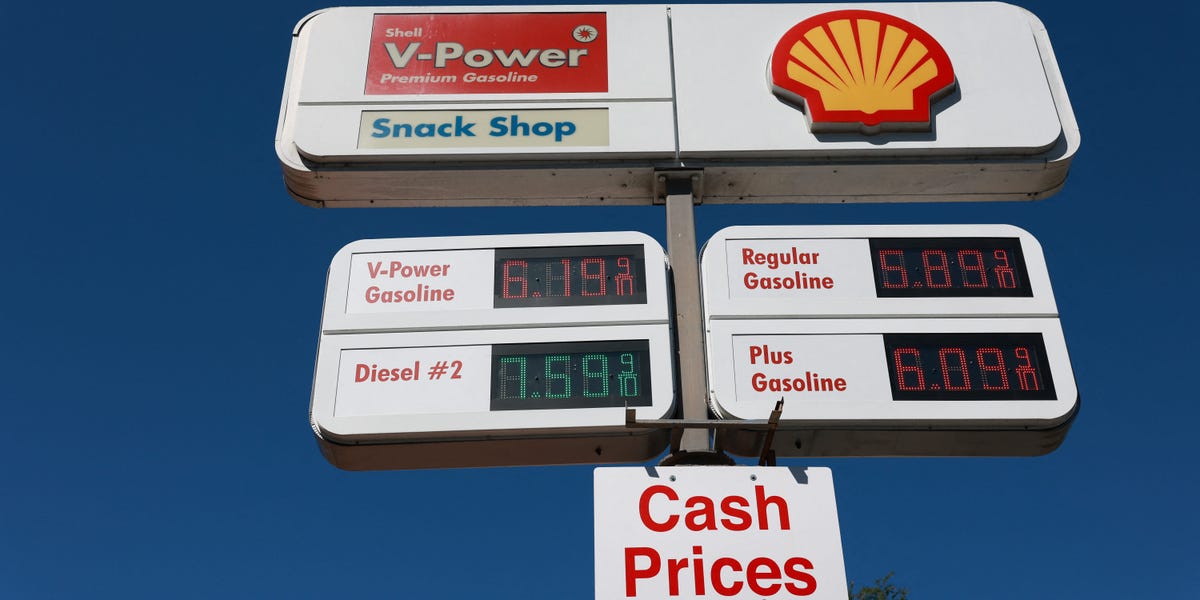
Inflation has been the chief worry on Wall Street lately. The idea is that higher oil prices from the war could feed inflation across other parts of the economy, since oil is a key input for goods ranging from fuel to plastic to industrial components.
Markets breathed a sigh of relief when Iran announced the reopening of the Strait, but supply kinks that have been created since the start of the conflict will likely take a long time to smooth out, Whalen said.
He pointed traffic around the Strait of Hormuz, which had been significantly disrupted in the past month. The shipping routes that were upended and the supply chain chaos could take months or even years to normalize, Whalen said.
The same issue applies to energy infrastructure, which takes years and significant money to rebuild. One report from Rystad Energy estimates it could cost as much as $58 billion to restore infrastructure in the Middle East damaged by the war.
The US will likely try to “adjust” for the loss of supply in the Middle East by ramping up its own production, but that will also take years to set up the proper infrastructure, Whalen added.
“All of these little systems moving energy, moving refined products, have been disrupted. You’ve also disrupted the supply infrastructure in the Gulf,” Whalen said. “You’re talking about months or years, depending on how much damage.”
“Is that the end of the world? No, but it’s going to continue to put horrible pressure on consumers,” he added of the inflationary impact.
Whalen said he believes that the economy could eventually tip into full-blown stagflation — a situation where prices spiral while the economy slows — by 2028. The scenario, which slammed the US economy in the 1970s, is often regarded as the worst-case for markets, and is thought by policymakers to be even more difficult to resolve than a typical recession, as high inflation prevents the Fed from cutting rates.